










































The Mandela Effect: Why People Remember Events That Never Happened
Explore the strange phenomenon of the Mandela Effect, where thousands recall events, facts, or details differently from reality. Discover psychological, cultural, and scientific explanations behind this mass false memory.


The term “Mandela Effect” was coined by Fiona Broome in 2009. She shared her memory of Nelson Mandela dying in prison during the 1980s. She was surprised to know that many others in attendance had the same memory. These people remembered news coverage, televised funerals, emotional global reactions and some other events that never had occurred. This shared false memory launched a new term that gained viral.
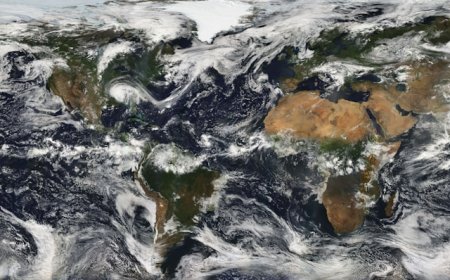
The Mandela Effect is most commonly associated with pop culture. Many people remember the popular children’s book series as “The Berenstein Bears” as “Berenstain.” This vowel swap is caused by widespread disbelief and reality manipulation. Some people remember New Zealand being northeast of Australia but it is located in southeast. Its correct location is clear from satellite maps but the geographical misremembering persists.
Mandela Effect happened due to the fallibility of human memory. Studies show that memory is not a perfect recording of past events but it is a reconstruction. We remember the life experiences but our brains remain filled with gaps, assumptions or related information. Over the time, these reconstructions can change. Especially when reinforced by some other persons with the same belief.
Confabulation term is used when your brain distorts or misinterprets memories. Our brains are powerful but they are not perfect. It feels like you are recalling a real memory but the details are incorrect. This effect can be magnified for the people living in groups and sharing their thoughts. They might share and reinforce incorrect details. This leads to the illusion of accuracy and reliability.
In the digital age, the spread of misinformation is very rapid. A misquoted line from a movie or drama once repeated often becomes the “truth” for many. Our minds use past experiences to process the information. If something goes against our expectations we try to adjust the memory to make it fit. It raises essential questions about how we know what we know. So next time when you are sure of a memory but it turns false. It means you might experiencing the Mandela Effect.
What's Your Reaction?
 Like
6
Like
6
 Dislike
0
Dislike
0
 Love
0
Love
0
 Funny
0
Funny
0
 Angry
0
Angry
0
 Sad
0
Sad
0
 Wow
0
Wow
0