

















































The Rise of the Multipolar World Is U.S. Global Dominance Coming to an End?
Explore how shifting alliances, emerging powers, and global economic changes are shaping a multipolar world. Is the era of U.S. dominance nearing its end?

The United States has held a unique position in global affairs for more than seven decades. After the World War II, American economic might, military reach and cultural influence made it the undisputed leader of the international order. In recent years, there is rise of a multipolar world where several powers compete for influence. The concept of a unipolar world became popular in the 1990s after the Soviet Union’s collapse. The U.S. enjoyed the unipolar moment with no rival superpower.
American military supremacy, coupled with its leadership of international institutions enabled Washington to shape global rules and norms but history rarely stands still. Economic globalization, technological shifts and the resurgence of other powers have gradually eroded this singular dominance. Today, countries like China, India, Russia, Brazil and even regional powers like Turkey and Saudi Arabia are asserting themselves on the world stage.
China’s rapid economic rise is perhaps the most significant factor reshaping the world order. In 2000, China’s GDP was $1 trillion, now it has exceeded to $17 trillion, making it the world’s second-largest economy. India, too, has emerged as a high-growth economy with global ambitions, projected to become the third-largest economy by the end of the decade. U.S. may no longer be the sole superpower but it remains the most influential single actor on the global stage.
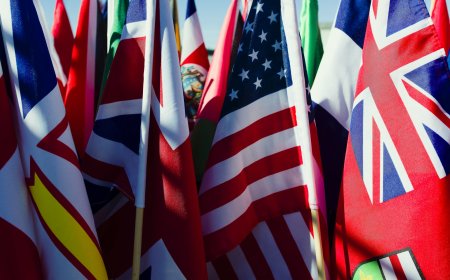
One of the clearest signs of a multipolar world is the rise of groupings like BRICS. It includes Brazil, Russia, India, China and South Africa. Initially an economic forum, BRICS has expanded into political coordination, trade agreements and discussions of alternative financial systems. Similarly, the Shanghai Cooperation Organization and the Asian Infrastructure Investment Bank are examples of non-Western-led institutions challenging the monopoly of U.S.
Multiple powers share influence but work within global institutions to address common challenges like climate change, pandemics and nuclear proliferation. This is called cooperative multipolarity. The rise of a multipolar world is less about the collapse of U.S. power and more about the diffusion of power across the borders. In the coming decades, global politics will be shaped by the complex interactions of multiple powers in an interconnected world.
What's Your Reaction?
 Like
6
Like
6
 Dislike
0
Dislike
0
 Love
0
Love
0
 Funny
0
Funny
0
 Angry
0
Angry
0
 Sad
0
Sad
0
 Wow
0
Wow
0