






















































Can Earth Hear Itself? Strange Sounds Our Planet Naturally Produces
Explore the mysterious and eerie sounds Earth makes—from seismic hums to atmospheric noises. Discover what causes these natural planetary sounds and what they reveal about our planet's inner workings.

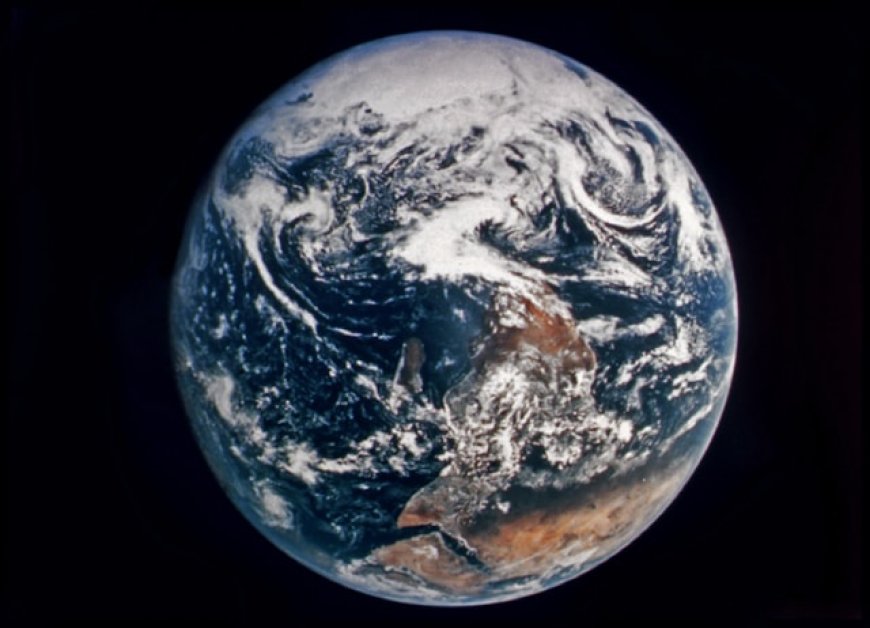
Earth is not silent. Our planet constantly hums, groans and whispers. These sounds are part of a vast and complex natural symphony. The idea of Earth "hearing" itself is poetic rather than scientific. The strange sounds that earth emits have fascinated scientists for centuries. This natural phenomena not only challenge our understanding about the earth but also offer vital clues about its inner workings.
One of the most bizarre discoveries of recent decades is the so called “Earth hum”. It was first reported in the late 1990s. This low frequency sound is constantly emitted by our planet. In case of earthquakes or volcanic activity these emisions stop. These sounds are too low to be heard by the human ear but can be detected by highly sensitive seismometers.
Scientists believe that Earth hum arises primarily from ocean waves. Especially when these waves interact with the sea floor. The waves travel across the ocean and crash against coastlines. They generate pressure that vibrates through the solid Earth. This creates a faint but continuous background noise. Some studies suggest that atmospheric turbulence and weather patterns may also contribute.
There is another phenomenon that sand dunes "sing" or "boom". These natural melodies can be loud enough to be heard from kilometers away. There is a science behind singing of sand dunes. These sounds are caused when dry sand grains tumble down the slopes of large dunes in unison. This synchronized movement creates vibrations in the ground and air which produce different notes depending on grain size, humidity and the shape of the slope.
After the earthquake, most of the energy released travels through the ground as seismic waves. Some of its energy also escapes as sound waves into the air. These sounds can sometimes be heard as deep rumbles and cracking noises. Earthquake survivors often describe the event as not just a shaking but an audible roar like thunder. Scientists have started to use audio data from earthquakes. Some devices can capture frequencies below the range of human hearing. So it can sometimes detect earthquakes and volcanic eruptions before the ground even begins to shake.
What's Your Reaction?
 Like
8
Like
8
 Dislike
0
Dislike
0
 Love
1
Love
1
 Funny
0
Funny
0
 Angry
0
Angry
0
 Sad
0
Sad
0
 Wow
1
Wow
1